

For most of human history, clothing was not particularly disposable.
Garments took time, skill, and valuable materials to make. People generally owned fewer pieces, repaired them when something went wrong, and expected them to remain useful for years. A coat was not necessarily something you replaced because a new silhouette appeared the following season. It was something you wore, maintained, and relied on.
Of course, there are plenty of reasons we would not want to return to the clothing industry of a century ago. But there is something valuable in the idea that the things we own should be made well enough to keep.
Today, clothing is more accessible than ever. Fast fashion has made it possible to buy new pieces at extraordinarily low prices, while increasingly rapid trend cycles give us a reason to replace them just as quickly. In the process, our perception of what clothing should cost (and how long it should last) has changed.
At BEDI, we take a different approach.
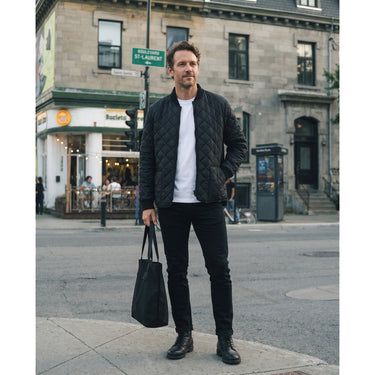
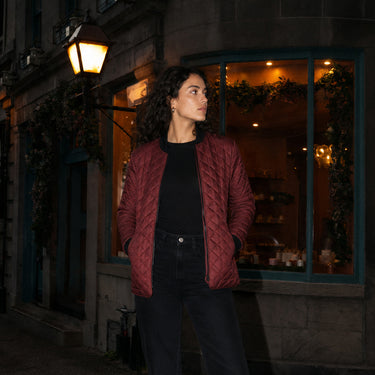
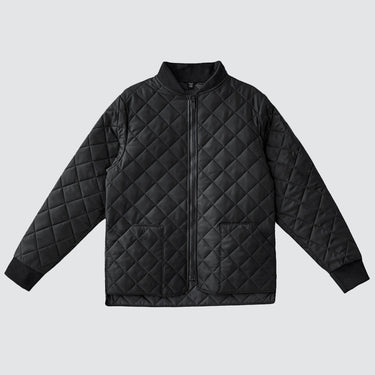
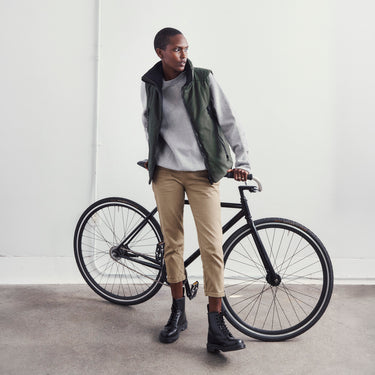
We believe in quality over quantity: using better materials, thoughtful construction, and local craftsmanship to create clothing and bags that are designed to stay in your life for a very long time.
What Does “Quality Over Quantity” Really Mean?
“Buy less, buy better” has become a familiar phrase in sustainable fashion, but quality over quantity is not simply about owning a minimalist wardrobe.
It is about expecting more from the things you do choose to own.
A winter coat should keep you warm year after year. A backpack should be able to handle commuting, travel, rain, and being tossed onto the floor without falling apart. A sweater should feel substantial and maintain its shape. A zipper should continue working after thousands of uses.
When something is made properly, you do not have to treat it as precious. It fits effortlessly into your life, and you can truly enjoy it and actually use it for its intended purpose.
That durability changes the way we consume. If you have a winter coat you love that performs reliably and still looks good after years of wear, there is far less reason to replace it. The same is true of a dependable bag or a heavyweight cotton sweater that you reach for every autumn.
How Fast Fashion Changed Our Expectations
The rise of fast fashion has fundamentally changed the speed of the clothing industry.
Instead of a handful of seasonal collections, many brands now release new products constantly. Trends that once lasted years can appear, peak, and disappear within months, sometimes even weeks. To make that model possible, clothing needs to be produced quickly and inexpensively.
The takeaway is not that every inexpensive garment is terribly made, nor that everyone needs to invest in expensive clothing. Clothing budgets are real, and affordability matters. But at an industry level, there is often an unavoidable tension between producing something as cheaply and quickly as possible and producing something intended to last for decades.
Materials may be lighter. Construction may be simplified. Hardware may be selected based on cost rather than longevity. Garments are often designed around what is selling now rather than what someone might still want to wear ten years from now.
Over time, that has also shifted our expectations as customers.
When a shirt costs less than dinner, it becomes easier to think of clothing as temporary. If a zipper breaks or a seam pulls apart after a few seasons, replacing the entire garment can feel more normal than repairing it.
Better Materials Make Better Clothing
Clothing quality can be hard to truly gauge until you have lived with the piece for a while.
Two fabrics can look relatively similar when they are brand new, but behave very differently after years of exposure to rain, snow, sunlight, friction, and everyday wear.
That is why BEDI materials are chosen not only for sustainability, but also for performance and durability.
Our recycled nylon, for example, is made using regenerated materials including discarded fishing nets and carpet fibres. But giving new life to these materials is only the beginning.
There are many types of fabrics that can be produced from recycled nylon (for instance, several swimsuit brands use recycled nylon for their swim collections!)
In our case, the version we use is an exceptionally durable ballistic nylon, made to withstand both the elements, and daily life.
Ballistic nylon was originally developed for demanding applications where abrasion resistance and strength matter. It is significantly tougher to work with than many conventional outerwear fabrics (including being considerably harder to sew, which is why we’re one of the only, if not the only company that uses it for coats) but we choose it because of how well it performs.
It is highly durable, naturally water resistant, and resistant to UV fading, helping coats maintain both their performance and appearance after years of wear. Many conventional coats instead use polyester or poly-cotton outer fabrics that can be easier and less expensive to manufacture, but may fade and wear more quickly over time. (I can personally attest that my previous winter coat was polycotton, and quickly faded from navy to a sad, dismal grey-ish blue within a couple years. Whereas the BEDI coat I purchased five years ago– before I worked here!– still looks brand new despite being worn hundreds of times and machine washed multiple times.)
The takeaway– using the more difficult material makes production harder. But using the better material also makes the coat better, not just on the rack, but for years to come. For us, that’s absolutely worth it.

The Small Details Matter
High-quality clothing isn’t just about the main fabric. Sometimes the component most likely to determine how long you can use a garment is something comparatively small.
Our founder Inder spent years on research and development for our best-selling winter coats. As he researched longevity, the same thing came up again and again– the first component to fail is almost always the zipper.
We use only YKK zippers made in Canada on our BEDI pieces, both outerwear and bags. YKK has long been known for reliable zipper manufacturing, and we intentionally choose sturdy components that can stand up to years of daily use. We’re especially lucky that YKK manufactures the zippers we use right here in Montreal!
While zippers are often the first thing to go, hardware on bags can also be an early issue when not crafted well. Our bags use military-grade metal hardware designed to withstand serious wear.
We feel these decisions are evident at first glance, but they become even more important after after years of use.

Made in Canada, in Small Batches
How something is made matters just as much as what it is made from.
BEDI outerwear and bags are made in small batches in Canada by highly skilled tailors.
Our local manufacturing allows us to maintain a close relationship with the people making our products and pay careful attention to construction and finishing. It also means producing at a much smaller scale than the enormous production runs associated with fast fashion.
Making products this way is slower, but we believe that’s a good thing. Our goal has never been to release the greatest possible number of styles each season. Our goal is to create pieces that are thoughtfully designed, well made, and timeless.
Why We Offer a Lifetime Guarantee
Perhaps the clearest reflection of our approach to quality is our lifetime guarantee.
All BEDI outerwear and bags are guaranteed for life.
If a zipper breaks twenty years from now, we would much rather repair the zipper for you than have you replace the coat.
That might sound unusual in an industry built around convincing people to continually buy something new, but to us it makes perfect sense. If we choose durable materials and manufacture our products carefully, we can confidently stand behind them.
It also changes the relationship between a customer and a product. A coat doesn’t have to remain pristine forever. Good products develop signs of use. They travel with you. They get rained on, stuffed into overhead compartments, worn to work, and taken on long walks through January snow. And if something eventually needs attention, it can often be repaired rather than discarded. That’s what longevity looks like in real life.
Is Buying Higher-Quality Clothing More Sustainable?
Sustainability in fashion is complicated, and there is no single material, certification, or manufacturing process that solves every problem. But one of the simplest ways to reduce the impact of what we wear is to keep clothing in use for longer.
Recycled materials matter. Responsible manufacturing matters. Local production matters. Durability matters too.
A sustainably produced garment that needs replacing every few years still requires new materials, manufacturing, packaging, and transportation each time it is replaced.
That is why we consider durability to be a key part of sustainability rather than a separate conversation, and why our materials are chosen with both in mind.
We use recycled nylon created from existing waste materials because it reduces reliance on virgin resources, and we use ballistic construction because we want that recycled material to remain useful for as long as possible.
What to Look for When Buying a High-Quality Winter Coat
Price alone does not guarantee quality.
Whether you are buying a BEDI coat or something completely different, there are a few things worth looking at when deciding if an outerwear piece is genuinely well made.
Look closely at the fabric. Does it feel substantial? Is it designed for abrasion, moisture, wind, and the conditions in which you will actually wear it?
Look closely at the hardware. Zippers, snaps, and buckles are small components that receive enormous amounts of use. Do they seem durable? Are they practical? A thin metal zipper on a freezing day in January is not going to zip up smoothly.
Look inside. Quality often reveals itself in details that are not particularly glamorous: reinforced seams, finished edges, thoughtful pockets, lining, and careful stitching.
In terms of craftsmanship, we recommend looking into where the garment was made, and what the brand is willing to tell you about its construction, while also checking to see what happens after you purchase it– does the company offer repairs? Replacement parts? A meaningful warranty?
A high-quality winter coat should not simply look impressive on the day you buy it. It should still be doing its job many winters later.
The Case for 100% Cotton Sweaters
The same approach to quality applies beyond outerwear.
Synthetic fibres can have useful applications, particularly in technical clothing, but sometimes a simple natural material is a classic for a reason— which is why we use heavyweight 100% cotton for our sweaters.
Our sweaters are made from 400 GSM heavyweight crossgrain-cut fleece, with flatlock seam construction and a substantial 400 GSM 1x1 rib collar. These details give the garment more structure, help it hold its shape, and contribute to the durable, substantial feel you notice as soon as you put it on.
Cotton breathes naturally and can age beautifully when properly constructed. A heavyweight fabric also feels very different from the increasingly common lightweight sweaters designed primarily around hitting a lower price point.
There is something reassuring about pulling out the same sweater when the weather cools each year and knowing exactly how it will feel.
Buying Fewer Things and Using Them More
There is an interesting side effect to owning things that work extremely well: you stop thinking about replacing them.
Your coat is simply your coat. Your backpack is the bag you grab when you leave the house. Your favourite sweater comes out every autumn.
You may still appreciate new design. We certainly do (it’s part of the reason we created our Second Life program, so people can switch up their look if they wish!) But when you invest in high quality pieces that you genuinely love, novelty becomes optional rather than necessary.
That, to us, is the most appealing version of quality over quantity. It is not about perfection, deprivation, or creating rules about how many things someone should own, it is about making purchases worthwhile.
It’s about choosing pieces you genuinely like, looking for materials and construction that can handle real life, repairing things when they need it, and gradually building a wardrobe where the best pieces earn their place by being worn again and again.
Clothing Worth Keeping
At BEDI, we know that making products in small batches in Canada, using premium materials and skilled local labour, costs more than producing clothing at the scale of fast fashion.
We also know that price matters. Our goal has never been to compete by making the cheapest coat or bag possible, but we also try to keep the prices within reason for the quality of the pieces. When we started creating these pieces, we didn’t ask “how can we make these as cheaply as possible?” We asked “how can we make these so they’re the best version possible”.
That means ballistic recycled nylon instead of choosing the easiest fabric to sew. YKK zippers made in Canada. Military-grade bag hardware. Heavyweight 100% cotton knitwear. Skilled Canadian tailors. Thoughtful construction. And a lifetime guarantee on our outerwear and bags because we intend those pieces to stay in use.
Fashion will continue to change. Trends will come and go, and there will always be something new to look at. But there’s something really special and deeply satisfying about an old piece that continues to work exactly as it should.